Tawny crazy ants (Nylanderia fulva) and red imported fire ants (Solenopsis invicta) present distinct operational threats requiring separate biological treatment vectors across Greater Houston. Fire ants produce…
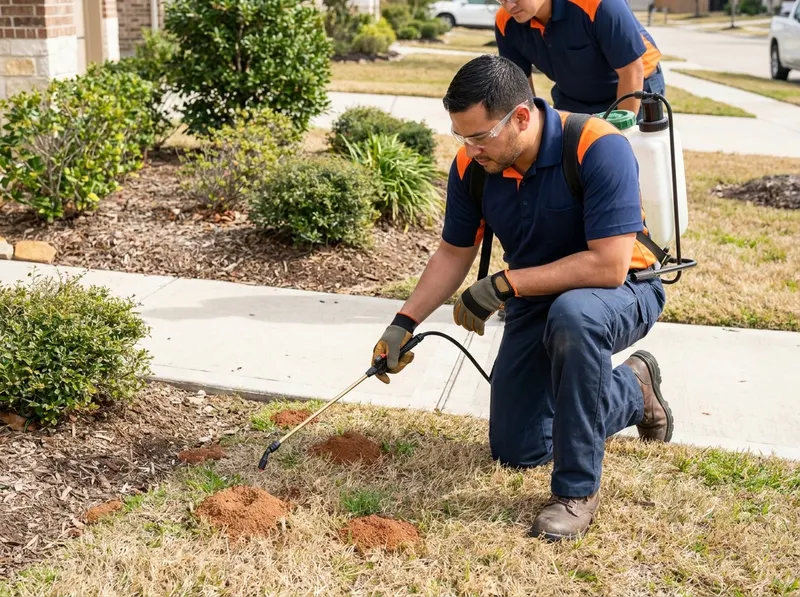
Tawny crazy ants (Nylanderia fulva) and red imported fire ants (Solenopsis invicta) present distinct operational threats requiring separate biological treatment vectors across Greater Houston. Fire ants produce prominent earthen mounds along sunny turf areas in Kingwood, Clear Lake City, and Meyerland, stinging defensively when disturbed. In contrast, tawny crazy ants form vast, interconnected polygyne supercolonies without central mounds, nesting under organic debris near Buffalo Bayou Park, Memorial, and The Heights. Tawny crazy ants accumulate inside outdoor air conditioning contactors, irrigation boxes, and pool pumps, causing short circuits due to mass carcass accumulation. Retail synthetic pyrethroid sprays fail because repellent surface chemicals merely scatter the multi-queen network across adjacent soil, accelerating colony budding.
Clinical field eradication relies on two distinct phases: granular broadcast baiting and systemic barrier drenching. For fire ant suppression, workers apply methoprene or hydramethylnon baits over dry turfgrass at rates between 1.0 and 1.5 pounds per acre. The foraging ants transport these slow-acting matrices directly to subterranean nursery chambers, sterilizing egg-laying queens within 14 to 28 days without triggering alarm pheromones. For tawny crazy ants, technicians combine fipronil-based perimeter bands along structural foundations with dinotefuran applications in heavy landscape beds. Because tawny crazy ants detoxify fire ant venom using their own formic acid secretions, untreated properties often experience explosive crazy ant dominance once fire ants vacate.
Properties bordering wooded waterways or expansive drainage easements in River Oaks, West University Place, and Oak Forest experience intense pressure from Gulf Coast humidity, which degrades conventional granular applications. Rainfall exceeding 1.0 inch within 24 hours of treatment can wash away surface baits before worker foragers retrieve them, requiring clinical reapplications to reset the defensive barrier. Routine quarterly perimeter applications prevent foraging lines from entering interior wall voids, eliminating the need for residual, odorous chemical sprays inside living rooms or bedrooms.
Every job gets a firm, written price after a free on-site visit.
Tell us about your tawny crazy ant and fire ant colony suppression job in Houston and we'll send a clear, written quote, usually the same day.
 Vandero Insect Elimination